

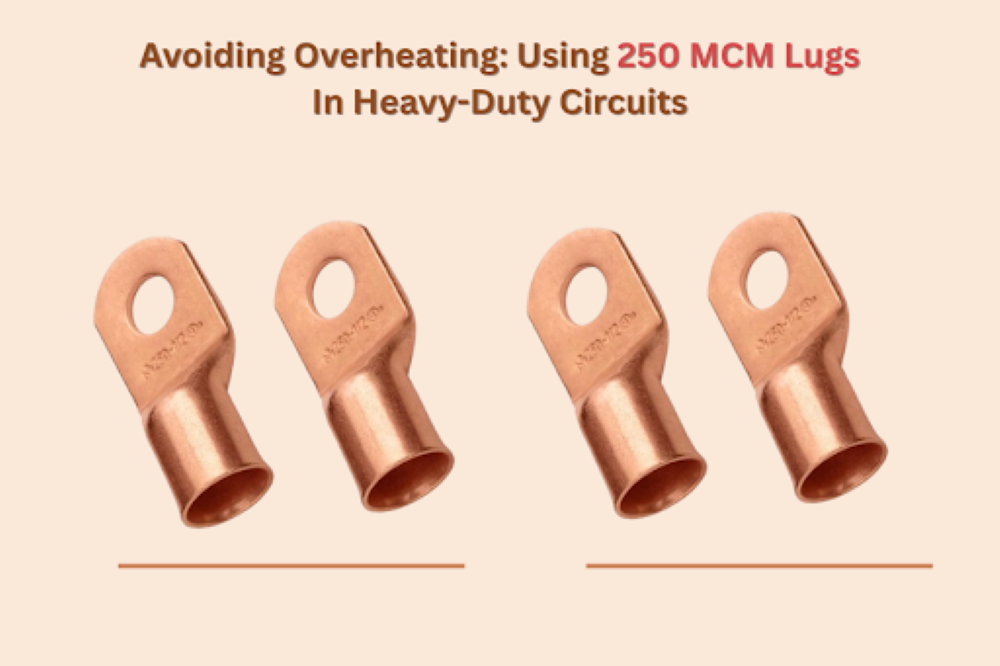
When you’re dealing with big electrical loads, the termination point is often the first place to check. Large conductors and long-running equipment can build heat fast if the connection isn’t right. Problems like loose crimps or undersized lugs can quickly turn into overheating or failure.
That’s why a properly matched 250 MCM lug makes such a difference. It’s made to handle the size and demands of 250 MCM cable, giving you a tight and dependable connection. In heavy-duty electrical setups, that level of reliability is what keeps the whole system working smoothly.
Why Overheating Happens In Heavy-Duty Circuits
Before getting into the benefits, it helps to understand what causes overheating at cable terminations.
Here are the most common reasons:
- Loose or weak crimps
- Undersized lugs for large conductors
- Corrosion creeping into the connection
- High resistance due to poor barrel contact
- Continuous high-load operation
When resistance builds up where the cable meets the lug, the connection begins to heat up. Over time this can damage the cable, melt insulation, or stress the equipment. With higher gauge cables like 250 MCM, the risk multiplies if the termination isn’t done correctly.
How 250 MCM Lugs Help Prevent Overheating
1. Built To Handle High Current Loads
For heavy-duty electrical setups, consistent conductivity is crucial. 250 MCM cable lugs use thick barrels and high-conductivity copper to move high current without strain. That design cuts down resistance where the cable connects and helps keep temperatures under control.
2. Tight, Secure Contact With The Cable
A proper crimp is essential. The barrel on a 250 MCM lug is designed to fully wrap around the strands once crimped with the right tool. This gives you:
- Better surface contact
- Strong mechanical grip
- Lower risk of hotspots
A full-contact crimp ensures the load spreads evenly across the connection rather than concentrating in a weak point.
3. Better Heat Dissipation
Large lugs have more mass, and that helps them shed heat faster than smaller ones. This adds an extra layer of protection in systems that run continuously or push high amperage.
4. Reduced Oxidation And Corrosion Issues
Even indoor systems aren’t completely free from moisture or chemical exposure. A small amount of oxidation increases resistance over time. Quality 250 MCM cable lugs resist this better, keeping the connection stable for years.
Where You’ll Commonly Use 250 MCM Lugs
These lugs aren’t for everyday wiring. They’re made for setups where reliability can’t slip even once.
Industrial Motors And Machinery
Larger motors draw strong startup currents. If the lugs aren’t sized correctly, the heat can spike instantly. Using 250 MCM lugs protects the termination during both startup surge and continuous running cycles.
Commercial Power Distribution Systems
Buildings and industrial sites often require large conductors for power feeds. These lugs help maintain safe connections in:
- Panels
- Distribution boards
- Transfer switches
- Main breaker enclosures
High-Capacity Battery Banks
Large inverters and backup systems rely on thick cables to move current efficiently. With 250 MCM cables, the lugs need to withstand constant cycling and heavy draw, especially during peak load.
EV Charging And Renewable Installations
Fast-charging stations, wind turbines, and large solar inverters often use high-capacity wiring. A reliable lug prevents performance drops and overheating during peak operation.
Signs Your Cable Lugs Might Be Overheating
Even with the right lug, periodic checks help you catch issues early. Watch out for:
- Warm or hot lug surfaces
- Burn marks or discoloration
- Melted or brittle insulation near the termination
- Loose hardware around the connection
- Thin trails of powdery corrosion
If you spot anything unusual, shut down power and inspect the connection right away.
Tips For Installing 250 MCM Lugs Correctly
Using the right lug is only half the job. Proper installation is what prevents overheating in the long run.
1. Match The Lug To The Cable Size
Never force a cable into a barrel that’s too small. A correct 250 MCM lug has a barrel sized precisely for that conductor.
2. Use A Hydraulic Crimper
Handheld tools won’t apply enough pressure for large cables. Hydraulic crimpers give you the force needed to compress the strands all the way.
3. Check For Full Compression
Make sure the crimp is tight and uniform. Any gaps inside the barrel will turn into hotspots under load.
4. Add Heat Shrink For Extra Protection
Heat shrink helps with:
- Moisture blocking
- Strain relief
- Vibration reduction
This is especially important in industrial or outdoor installations.
5. Torque Hardware Properly
If the lug is bolted to a stud, follow the torque specs. Wrong torque equals poor contact, which leads to overheating.
Ensure Safety And Performance With Proper 250 MCM Lugs
With high-load wiring, your whole setup relies on strong, dependable connections. A 250 MCM lug gives you the conductivity and durability needed to manage heavy currents without overheating. From industrial machines to commercial panels and big battery systems, choosing the right lug keeps resistance low and your system running the way it should.
For dependable 250 MCM cable lugs, you can explore Selterm’s range of 250 MCM cable lugs to get lugs built for accuracy, longevity, and heavy-duty performance.